
Eye exams
What to expect at your eye exam
A calm walk-through of a comprehensive eye exam, what to bring, and why dilation sometimes comes up.
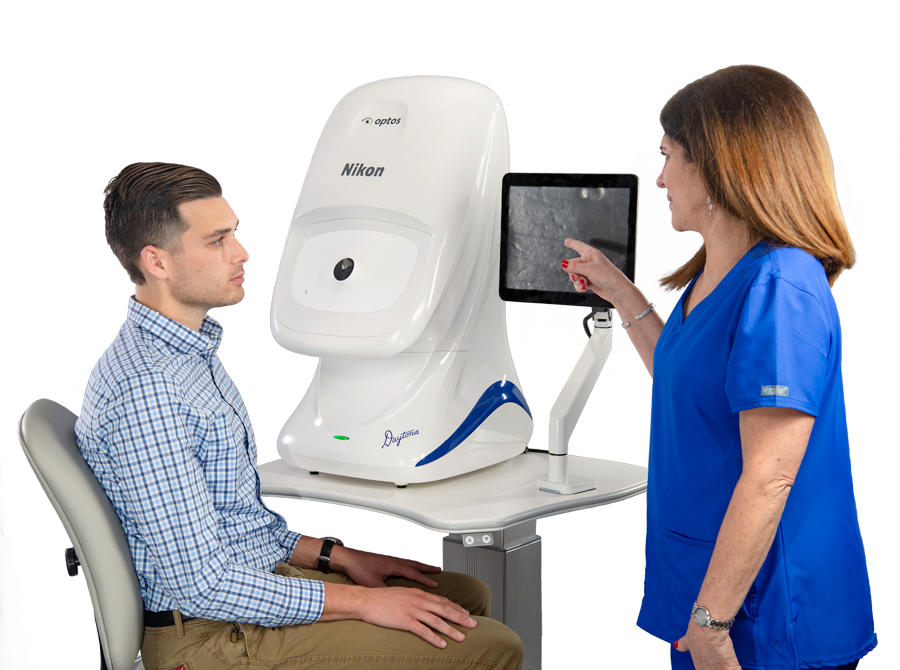
If it's been a while since your last eye exam, or you're coming in for the first time, it helps to know what's ahead. Here's what a typical comprehensive eye exam looks like.
1. A conversation first
We'll start by asking about your vision, any symptoms, your general health, medications, and your family's eye history. We'll also ask what you need to see well for — screens, driving, reading, surfing, work.
2. How well you see
You'll read letters on a chart to measure your vision at distance and up close. If you need glasses, we'll fine-tune your prescription by having you compare lens choices — the familiar "better one, or two?"
3. How healthy your eyes are
The doctor examines the front of your eyes and the structures inside them, and may check the pressure inside the eye. Many eye conditions have no early warning signs, which is part of why these checks matter even when your vision seems fine.
4. Possibly, dilating drops
Dilating drops widen the pupil so the doctor can see more of the inside of the eye. They can leave your vision blurry, especially up close, and make your eyes sensitive to light for several hours. Bring sunglasses, and consider having someone drive you home.
5. Results and next steps
Before you leave, we'll explain what we found in plain language, answer your questions and talk through any next steps.
What to bring
- Your current glasses and contact lenses (or the lens boxes)
- A list of medications and eye drops
- Your insurance card and photo ID
- Sunglasses
This article is general information and isn't a substitute for an eye exam or personal medical advice.