
Comprehensive eye exams
A thorough eye exam, explained as we go.
Whether you need an updated prescription or want a closer look at your eye health, Dr. Hartman will walk you through what he's checking and what he finds.
What's included
Two questions: how well do you see, and how healthy are your eyes?
A comprehensive exam looks at both. Many eye conditions have no early symptoms, which is one reason regular exams matter even when your vision feels fine.
- A conversation about your vision, health history, medications and daily visual needs
- Vision and prescription testing for glasses
- Eye teaming, focusing and eye muscle checks
- Eye pressure and a careful look at the front and back of the eye
- A clear explanation of results and next steps
Step by step
What your visit looks like.
- 1
Check-in and history
Bring your glasses, contacts, medication list and insurance card. We'll ask what you've been noticing and what you need to see well for — screens, driving, reading, the water.
- 2
Measurements
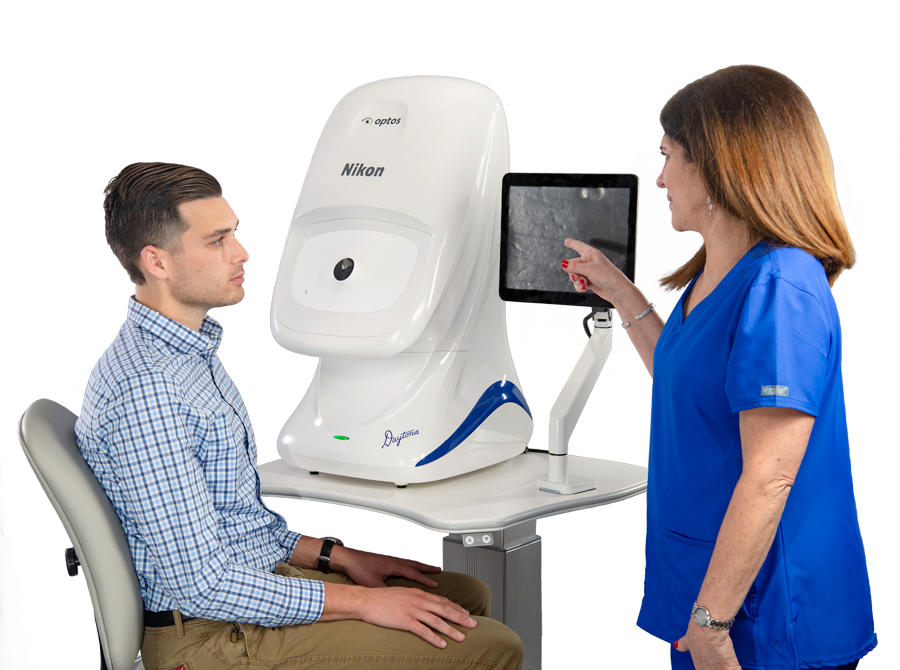
Instruments measure how your eyes focus light and gather information the doctor will use during your exam.
- 3
Exam with Dr. Hartman
Prescription fine-tuning, eye health evaluation, and dilating drops if they're recommended for you.
- 4
Results and plan
A plain-language summary of what we found, your prescription, and when to come back.
How often
When to schedule your next exam.
How often you need an exam depends on your age, eye health, symptoms and risk factors. If you have diabetes or high blood pressure, ask your doctor how often you need a dilated eye exam.
Dr. Hartman will recommend a schedule based on your own eyes and health.
Common questions
How long does an eye exam take?
Visit length depends on the appointment and testing needed. Call for an estimate, and allow extra time if dilation is recommended.
Will my eyes be dilated?
Not always. Dilating drops help the doctor see more of the inside of the eye, and Dr. Hartman will explain whether they're recommended for you. They can blur your vision and make you light-sensitive for a few hours.
Is a vision screening the same as an eye exam?
No. A screening, like the one at school or the DMV, checks whether you can read a chart. A comprehensive exam also checks the health of your eyes and fine-tunes your prescription.
Does an eye exam include a contact lens prescription?
A contact lens prescription requires a contact lens fitting in addition to the eye exam, because the lens sits directly on the eye. Let us know when you book if you wear or want contacts.
Living with diabetes? Explore diabetic eye care. You can also learn about the instruments used in your exam.
Due for an eye exam?
Call the office to schedule. We'll help you check your coverage too.