
Everyday lenses
Comfortable lenses for work, school, the beach and everything between. We'll talk through daily and other replacement options and how to care for them.
Contact lenses
From a first pair of daily lenses to eyes that have been harder to fit, a contact lens consultation starts with how you live and what you need to see.
Comfortable lenses for work, school, the beach and everything between. We'll talk through daily and other replacement options and how to care for them.
Astigmatism doesn't have to rule out contact lenses. We'll look at how your eyes are shaped and what may give you stable, clear vision.
For people who need help both far away and up close, multifocal contact lenses are one option worth discussing alongside glasses.
If lenses have been uncomfortable, haven't given clear vision, or your eyes have special fitting needs, we'll take the time to understand why and explore what may help.

Specialty lenses
Some eyes need a different kind of lens to see clearly and comfortably — for example, after an injury or surgery, with an irregularly shaped cornea, or with a very high prescription.
Specialty lenses take more time to fit and usually involve several visits. We'll explain the process and costs before you begin.
The consultation
The right lens depends on your eyes. We'll recommend options after your evaluation rather than promising a specific lens or result in advance.
Yes. A glasses prescription and a contact lens prescription are different, because a contact lens sits directly on the eye. A fitting checks that the lens fits well and keeps your eyes healthy.
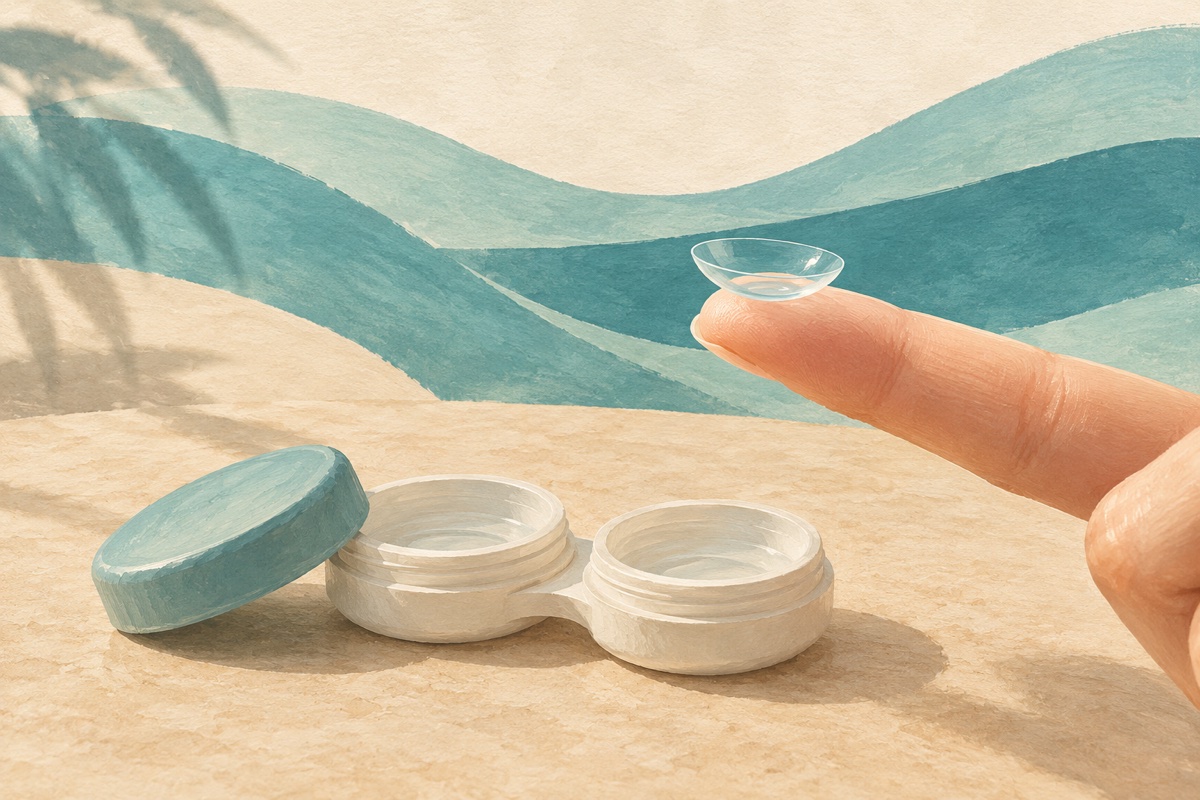
Water and contact lenses don't mix. Read our article on ocean days and contact lens care for practical tips.
Often, yes. Lens materials and designs have changed, and discomfort or blurry vision usually has a reason we can look into. Tell us what happened last time.
Coverage varies by plan, and a contact lens fitting is often handled separately from the eye exam. Call us at (808) 870-2500 and we'll help you check what your plan includes before your visit.
Specialty contact lenses
Your needs
Tell us about blur, discomfort or trouble with earlier lenses. An evaluation helps us decide which options are worth trying. Every design has tradeoffs, and no lens is right for every eye.
Call to set up a contact lens consultation.